May 12, 2026 • Celeste Marchand • 9 min reading time • Prices verified June 6, 2026
Single-Origin Dark Chocolate Bars Ranked: From Madagascar to Belize, What Each Region Actually Tastes Like
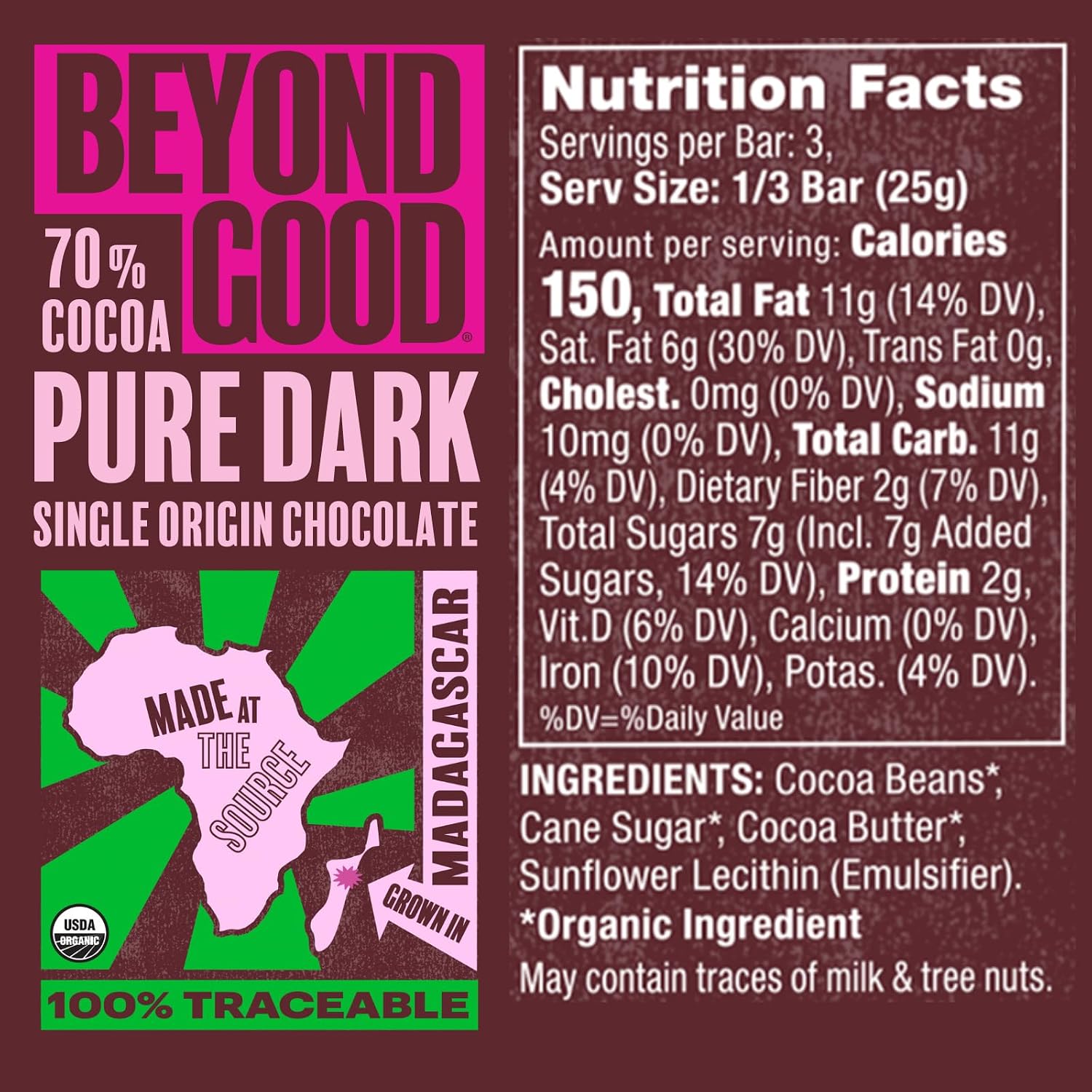
If you’ve ever bitten into a dark chocolate bar and thought, wait, did someone add raspberry to this? — you’ve already experienced the central mystery of single-origin chocolate. “Single-origin” simply means the cacao beans used to make the bar were grown in one specific place — a country, a region, or even a single farm — rather than blended from beans sourced across multiple continents. That origin matters more than almost any other factor on the label, because cacao, like wine grapes or olive oil, absorbs the character of its soil, climate, and local fermentation traditions. The result is that a bar from Madagascar can taste genuinely tropical-fruity, while a bar from Peru can taste nutty and almost savory — both made with nothing but cacao and sugar. This guide maps the major origins, ranks standout bars within each, and gives you the decision framework to match origin to palate, purpose, and price point.
| EDITOR'S PICK[Marou Origins 5 Pack Mini Bars](https://www.amazon.com/dp/B06W52L849?tag=greenflower20-20)… | Mid-tier[OmNom Milk of Madagascar](https://www.amazon.com/dp/B0C6RKWTR5?tag=greenflower20-20) | Budget pickBeyond Good Organic Madagascar… | |
|---|---|---|---|
| Origin | Vietnam | Madagascar | Madagascar |
| Cacao % | — | 45% | 70% |
| Dairy-free | ✓ | — | — |
| Gluten-free | ✓ | — | — |
| Soy-free | ✓ | — | — |
| Bar weight | 24g / 0.84 oz | 60g | 2.64 oz |
| Price | $38.89 | $31.59 | |
| See on Amazon → | See on Amazon → | See on Amazon → |
Madagascar: The Fruitiest Chocolate on the Planet (And Why That Surprises Everyone)
Madagascar cacao is the most reliably fruit-forward origin in commercial chocolate. The dominant flavor notes across published reviews and producer tasting panels — sourced by Smithsonian Magazine’s coverage of cacao terroir and confirmed in Bon Appétit’s explainer on dark chocolate flavor development — are red berry, dried cherry, and a tartness that reads almost like hibiscus. None of that is added. It comes from the specific Trinitario cacao genetics, the volcanic-rich soil of the Sambirano Valley, and fermentation practices that preserve the beans’ natural acidity.
Beyond Good Madagascar 70% is the most widely reviewed entry-level Madagascar bar available in the US market, and it earns its reputation. Verified buyers consistently describe it as “easily the fruitiest chocolate I have ever consumed,” with explicit surprise that no fruit is listed in the ingredients. That reaction is the point — it’s the purest possible demonstration of what terroir means in practice. At 70% cacao, the bar is dark enough to let origin shine without the bitterness that shuts down casual palates.
OmNom Milk of Madagascar uses the same cacao — same origin, same terroir logic — but at 45% with the addition of milk solids. Reviewers describe a completely different experience: a long caramel finish, richness that lingers, what one buyer called an “intoxicating aftertaste.” This is the correct bar to hand to someone who finds 70% too sharp. The origin’s fruit character is still present, softened into something more dessert-forward.
Decision rule for Madagascar: If your buyer or recipient is fruit-forward by preference (loves dark-cherry desserts, high-acid wines, bright flavor profiles generally), Madagascar at 70% is the single clearest illustration of terroir you can offer. If they prefer richness over brightness, the 45% milk format delivers the origin story with less confrontation.
Vietnam: Terroir With a Narrative
Vietnam is a relative newcomer to premium chocolate, and Marou is the brand that put it on the map. Founded in 2011 by two French entrepreneurs who sourced cacao directly from Vietnamese farmers, Marou now ships internationally and has developed a following among single-origin enthusiasts who want both a great bar and a great story. Saveur’s profile of the brand describes the company’s approach as genuinely farm-direct, with each bar labeled by province — Ba Ria, Ben Tre, Tien Giang — and each province yielding measurably different flavor profiles.
Marou’s Vietnam bars run 70–80% and are characterized by flavor notes of earth, dark fruit, and a distinctive spice finish that reviewers consistently describe as warming or exotic. At least one verified buyer reviewed the bar after first encountering it in Vietnam itself, then locating it stateside — a storytelling angle that captures something real about how single-origin chocolate rewards travelers and curious eaters alike.
For corporate gifting coordinators: Marou’s packaging is among the most visually striking in the category. The illustrated wrapper design is genuinely gift-ready without additional packaging, which matters when you’re sourcing 50+ units for client deliveries and every detail has to look deliberate.
Belize and the Americas: Earthier, More Complex, More Divisive
Belize produces cacao that reads very differently from Madagascar or Vietnam. The flavor profile tends toward earthiness, tobacco, dried fig, and what fine-chocolate reviewers (writing for outlets including The Chocolate Life) often describe as “savory-adjacent” depth. It’s chocolate that rewards slow eating and works beautifully with aged cheese, but it can land flat for buyers expecting the brightness of a Madagascar bar.
Dick Taylor Belize 72% with Fleur de Sel is the most instructive case study in this origin. It consistently earns four-star reviews rather than five — not because it underperforms, but because informed buyers dock it for price relative to perceived value. One widely cited review calls it “much better than Hershey’s Special Dark” while specifically awarding only four stars because of the cost. That framing tells you something important: this is a bar for buyers who already understand the category and want to reward themselves, not a gateway bar. The fleur de sel addition adds a mineral counterpoint that sharpens the earthy base notes considerably, and the bean-to-bar production process (Dick Taylor roasts and refines from raw bean at their Eureka, California facility) is legitimate, not marketing language.
By the numbers: Cacao percentage and what it actually means to flavor
| Percentage | Sugar content | Typical flavor experience |
|---|---|---|
| 64–66% | ~36% sugar | Accessible; chocolate-forward, low bitterness |
| 70–72% | ~28–30% sugar | Balanced; origin notes emerge more clearly |
| 75–80% | ~20–25% sugar | Intense; bitterness amplified, origin character very exposed |
Per Fine Cooking’s overview of chocolate composition, each 5–6 percentage-point jump reduces sweetness enough that the tasting experience shifts meaningfully — which is why the same origin can taste gentle at 64% and confrontational at 80%.
Valrhona Tulakalum: A Case Study in Premium Expectations
No honest ranking of single-origin bars can ignore Valrhona, and no honest treatment of Valrhona can ignore the friction that premium pricing creates. Valrhona Tulakalum (75%, Solomon Islands origin) generates some of the most instructive reviews in the category — including at least one from what reads as a highly knowledgeable buyer who misses Valrhona’s older Le Noir series and finds Tulakalum comparatively thin. That’s worth sitting with.
The Chocolate Life’s analysis of single-origin pricing dynamics makes the relevant point: Valrhona’s reputation is built on consistency, supply-chain control, and culinary industry adoption, not on being the most experimental or terroir-expressive option at any given price point. Serious Eats’ dark chocolate review coverage positions Valrhona as a benchmark rather than a revelation — technically accomplished, genuinely excellent, and correctly priced for what it is. But “excellent” and “surprising” are different things, and experienced palates increasingly want the latter.
The honest tradeoff: Valrhona at $8–12 per bar is easier to justify as a professional reference point and more predictable for corporate gifting in bulk. Beyond Good at $4–6 per bar is more likely to generate a genuine “what is this?” reaction in a first-time single-origin buyer. Neither is wrong. They serve different use cases.
Frequently Asked Questions
Why does single-origin dark chocolate sometimes taste fruity when there’s no fruit in it?
The fruit flavor comes from the fermentation process that cacao beans undergo after harvest — a 5–7 day fermentation that develops flavor precursors — combined with the genetic variety of the cacao plant and the mineral composition of the soil. Bon Appétit’s explainer on dark chocolate flavor development notes that the same compounds responsible for fruit esters in wine (acetic acid, lactic acid fermentation byproducts) occur naturally in cacao fermentation. Madagascar’s volcanic-soil Trinitario cacao is particularly prone to producing these compounds at high levels.
What is the difference between 64%, 70%, and 75% cacao in terms of actual flavor?
The percentage refers to the total content of cacao-derived ingredients (cacao mass plus cacao butter) as a proportion of the bar’s weight. Higher percentage means less sugar. At 64%, most palates experience a smooth, accessible chocolate flavor with mild bitterness. At 70%, the balance shifts: origin characteristics become more pronounced and bitterness is more present. At 75%+, the bar becomes genuinely intense — the origin’s acidity, earthiness, or fruitiness is fully exposed, and the experience rewards slow eating rather than casual snacking.
Is Valrhona worth the price compared to Beyond Good or Dick Taylor?
It depends entirely on what you’re optimizing for. Valrhona offers predictability, culinary-industry credibility, and elegant packaging. Beyond Good delivers a more vivid terroir experience at a lower price point. Dick Taylor offers genuine bean-to-bar craft with a maker’s story. For corporate gifting where brand recognition matters, Valrhona wins. For personal exploration or “wow” gifting to a curious chocolate eater, Beyond Good’s Madagascar or Marou’s Vietnam bars often punch above their price.
What does “bean-to-bar” mean and does it make chocolate taste better?
Bean-to-bar means the chocolate maker controls the entire production process — sourcing raw cacao beans, roasting them, grinding them, and refining the finished chocolate — rather than buying pre-made chocolate mass (called couverture) from a large industrial supplier. Per The Chocolate Life’s coverage of small-batch chocolate production, bean-to-bar doesn’t automatically mean better, but it does mean the maker has full control over flavor decisions and can make choices optimized for expression rather than volume. Dick Taylor is a genuine bean-to-bar operation. Valrhona processes its own beans but at industrial scale.
Which single-origin bar is the best starting point for someone who only eats Lindt 70%?
Beyond Good Madagascar 70% is the single best on-ramp. It’s the same percentage as what they already know, so the bitterness level is familiar. But the flavor is dramatically more expressive — that berry-fruit brightness is unmistakable and memorable. The “wait, there’s no fruit in this?” moment is the fastest possible introduction to why origin matters.
Does the percentage or the origin matter more for flavor?
Origin. Percentage shapes the intensity of whatever the origin is expressing, but it doesn’t change the fundamental character. A 70% Madagascar bar and a 70% Belize bar taste completely different from each other; a 70% Madagascar bar and a 75% Madagascar bar taste recognizably similar. Smithsonian Magazine’s coverage of chocolate terroir describes the origin as the “flavor address” — the percentage is just the volume dial.
The Decision Framework
If you’re building a tasting flight for a client, sourcing samples for a corporate gifting pitch, or simply deciding which bar to explore next, use this:
- Fruit-forward, bright, accessible: Madagascar 70% (Beyond Good is the entry point; OmNom’s 45% milk version if the recipient skews sweeter)
- Exotic, narrative-rich, gift-ready packaging: Marou Vietnam
- Earthy, complex, savory-adjacent, for experienced palates: Dick Taylor Belize with Fleur de Sel
- Reliable benchmark, corporate-appropriate brand recognition: Valrhona Tulakalum
- “I want to understand the whole category” starting point: Madagascar 70%, then Vietnam, then Belize — in that order, from bright to complex
Single-origin dark chocolate rewards the same instinct that drives any quality-focused purchase: the willingness to pay attention. The bars listed here aren’t just good chocolate. They’re arguments — made in flavor — that where something comes from changes everything about what it tastes like.