May 5, 2026 • Celeste Marchand • 11 min reading time • Prices verified June 6, 2026
Ethical Chocolate That Actually Tastes Good: Tony's, Alter Eco, Raaka, and Beyond Good Compared
Here’s something most people don’t expect: the chocolate bar sitting next to the register at a grocery store and the one sold in a specialty shop for four times the price can both claim to be “ethical.” That word — along with “fair trade,” “direct trade,” and “bean-to-bar” — gets used so casually that it’s stopped meaning much to a lot of shoppers. But for a growing group of buyers, those labels are the whole point. They want to know their purchase didn’t fund child labor on a cacao farm in West Africa, and they’d like the bar to taste genuinely good while they’re at it.
This piece is for the buyer who already knows that Tony’s Chocolonely exists, has heard of Raaka, and is trying to figure out which of these mission-driven brands actually deserves the shelf space — and the spend — in 2026. We’ll name the tradeoffs, flag where flavor and values diverge, and give you the clearest “if X, then Y” decision frame we can build from available reviews and sourcing documentation.
What “Ethical” Actually Means on a Chocolate Label
Before comparing bars, it’s worth locking in what the labels mean, because they do not all say the same thing.
Fair Trade (certified by organizations like Fairtrade International or Fair Trade USA) sets a floor price for cacao and requires some community premium payments. It does not, on its own, guarantee that individual farmers are paid well — the cooperative structure means benefits can be distributed unevenly. The Fine Chocolate Industry Association’s 2025 Transparency Report on Sourcing and Certification Standards notes that fair trade certification is meaningful as a baseline but is increasingly viewed by industry insiders as a minimum, not a gold standard.
Direct trade is not a certification — it’s a relationship model. A maker who buys direct claims to negotiate price and quality standards directly with a farm or cooperative, often at above-market rates, and to visit those farms in person. The Chocolate Life, the industry’s most detailed sourcing-focused publication edited by Clay Gordon, notes in its 2024 coverage of direct trade labeling that these claims are unverifiable by third parties and vary wildly in rigor. The best makers publish their sourcing contracts and farm visit records; the worst just print “direct trade” on a wrapper.
Bean-to-bar refers to the process: the maker starts with raw cacao beans and controls every step through to the finished bar, rather than buying pre-made chocolate mass from an industrial supplier. This matters for flavor because fermentation, roasting temperature, and conching time all dramatically affect taste — and bean-to-bar makers can dial those variables to the specific bean lot. Food & Wine’s 2023 piece “Bean-to-Bar Chocolate, Explained” is a useful primer on why process control translates directly into flavor distinctiveness.
By the numbers:
- Approximately 70% of the world’s cacao supply comes from West Africa, where child labor remains structurally embedded. Smithsonian Magazine’s 2023 investigation “The Bitter Truth About Chocolate and Child Labor” documents the supply chain conditions that make sourcing transparency so consequential.
- Fairtrade minimum price for bulk cacao: approximately $2,400 per metric ton (2025 figures); specialty direct-trade premiums can run $4,000–$8,000 or more per metric ton
- Tony’s Chocolonely publishes an annual sourcing report with named cooperative partners and third-party audit results
The Four Brands, Compared Honestly
Each brand below occupies a distinct position on the spectrum from accessible-and-verified to artisan-and-complex. The H3 sections are structured to match the decision framework in the table that follows.
Tony’s Chocolonely — The Verified-Sourcing Benchmark
Alter
$8.85
In stock on Amazon
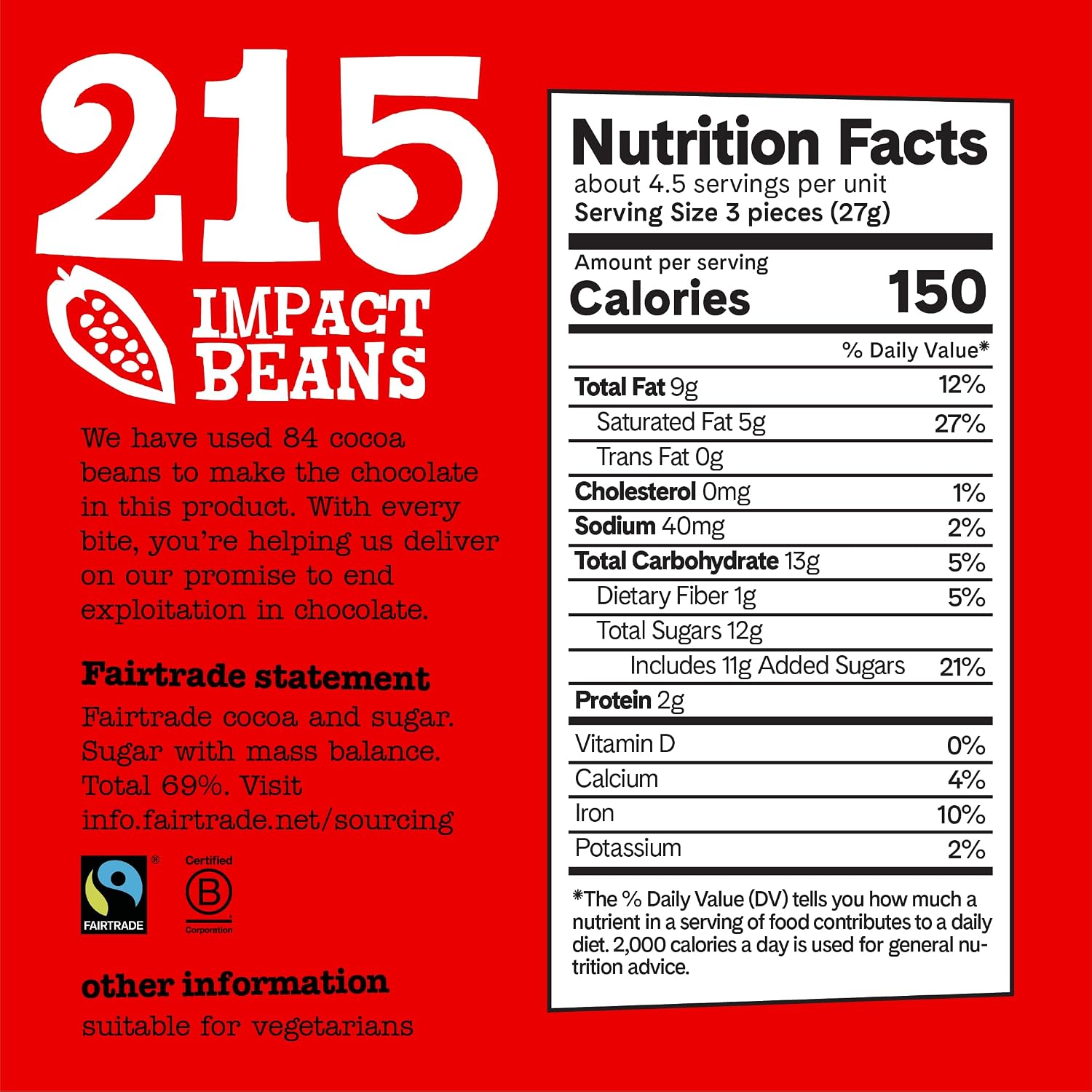
Check price on AmazonTony’s is the brand that made mission-forward chocolate mainstream. The Dutch company’s sourcing model — they call it “100% slave free” and publish the cooperative names, payment records, and third-party audit results — is more transparent than almost anything else at its price point. Bon Appétit’s 2024 guide to ethical chocolate bars named Tony’s as one of the few mass-accessible brands doing structural supply chain work rather than certification box-checking.
On flavor: Tony’s bars are genuinely enjoyable, but they are not artisan chocolate in the bean-to-bar sense. They use a large-scale industrial process, and the flavor profile is consistent, crowd-pleasing, and relatively unchallenging. The 51% Dark Milk is probably their best bar for most buyers — approachable enough for milk chocolate fans, interesting enough not to be dull. The 70% Extra Dark reads as clean and slightly bitter without much terroir character.
Who this is for: Tony’s gives you the most verified ethical sourcing at the most accessible price point. The flavor ceiling is lower than the bean-to-bar makers below. If you’re buying for a large group, a corporate event, or a situation where ethical provenance matters more than tasting notes, Tony’s is the pragmatic pick.
Alter
$8.85
In stock on Amazon
Check price on AmazonAlter Eco — The Wellness-Aligned Daily Bar
TCHO
$18.99
In stock on Amazon
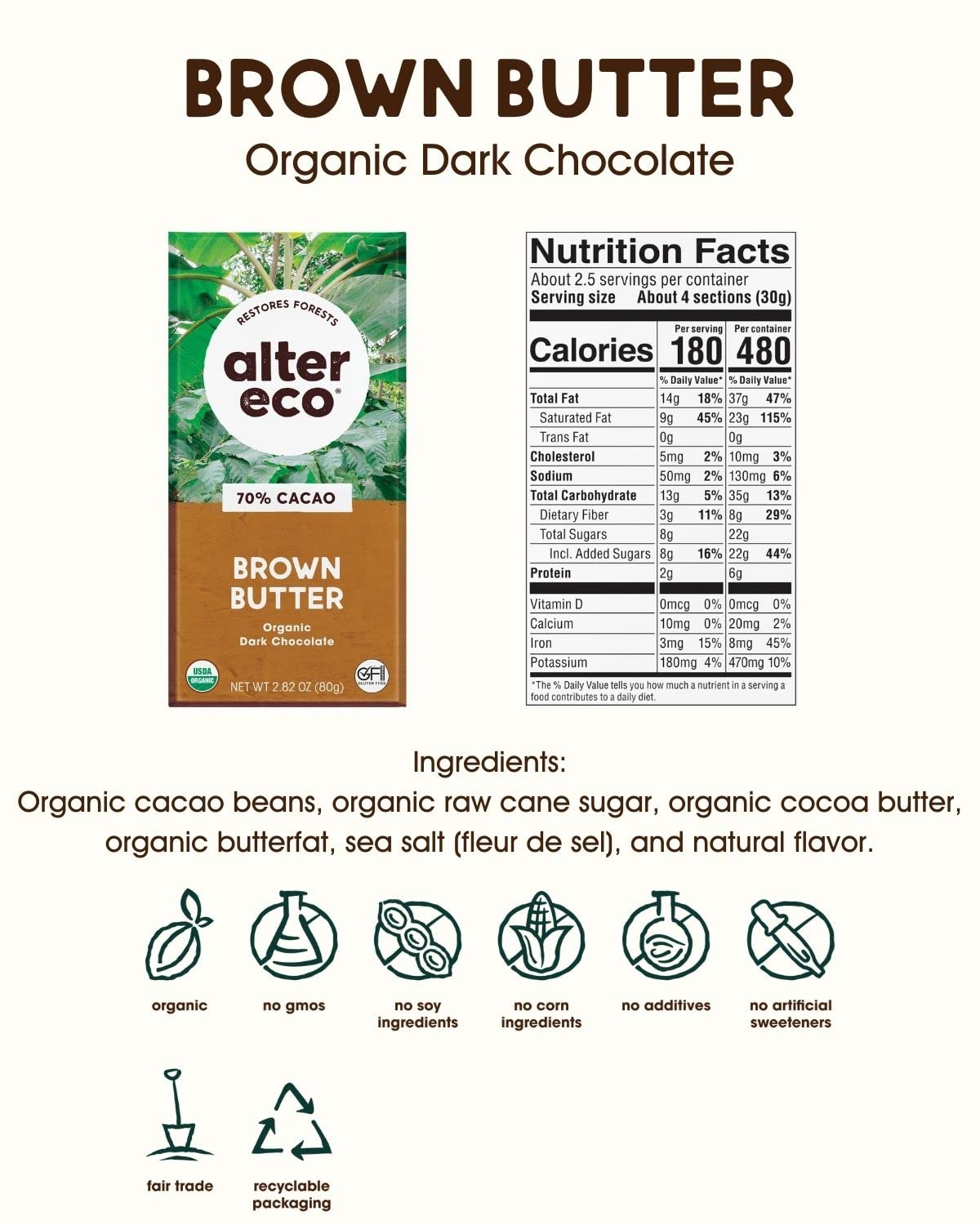
Check price on AmazonAlter Eco occupies a specific niche: certified organic, carbon-neutral, fair trade, and positioned strongly toward buyers who want wellness alignment alongside ethical sourcing. Reviewers consistently describe Alter Eco as a daily ritual purchase rather than an occasional treat — the brand’s language around cacao as a nutrient-dense food resonates with that segment.
Flavor-wise, Alter Eco’s dark bars (particularly the 70% and 85% Deep Dark) read as smooth and relatively straightforward — less fruity complexity than Raaka or Beyond Good, more of a familiar roasted-cocoa profile. The Dark Salted Brown Butter is a recurring best-seller for reviewers who want something slightly indulgent without being maximally intense.
The organic and carbon-neutral positioning is well-documented, but Food & Wine’s 2023 bean-to-bar explainer notes that sourcing from cooperatives rather than single-origin farms limits terroir distinctiveness — a meaningful observation for flavor-focused buyers even when it doesn’t diminish the ethical credentials.
Who this is for: Alter Eco is the best pick when the buyer genuinely wants the wellness-and-ethics package and isn’t primarily flavor-focused. The price-to-mission ratio is strong. It’s not the bar you buy to have a tasting conversation about origin.
TCHO
$18.99
In stock on Amazon
Check price on AmazonRaaka Chocolate — The Craft Specialist
Raaka
$26.95
In stock on Amazon
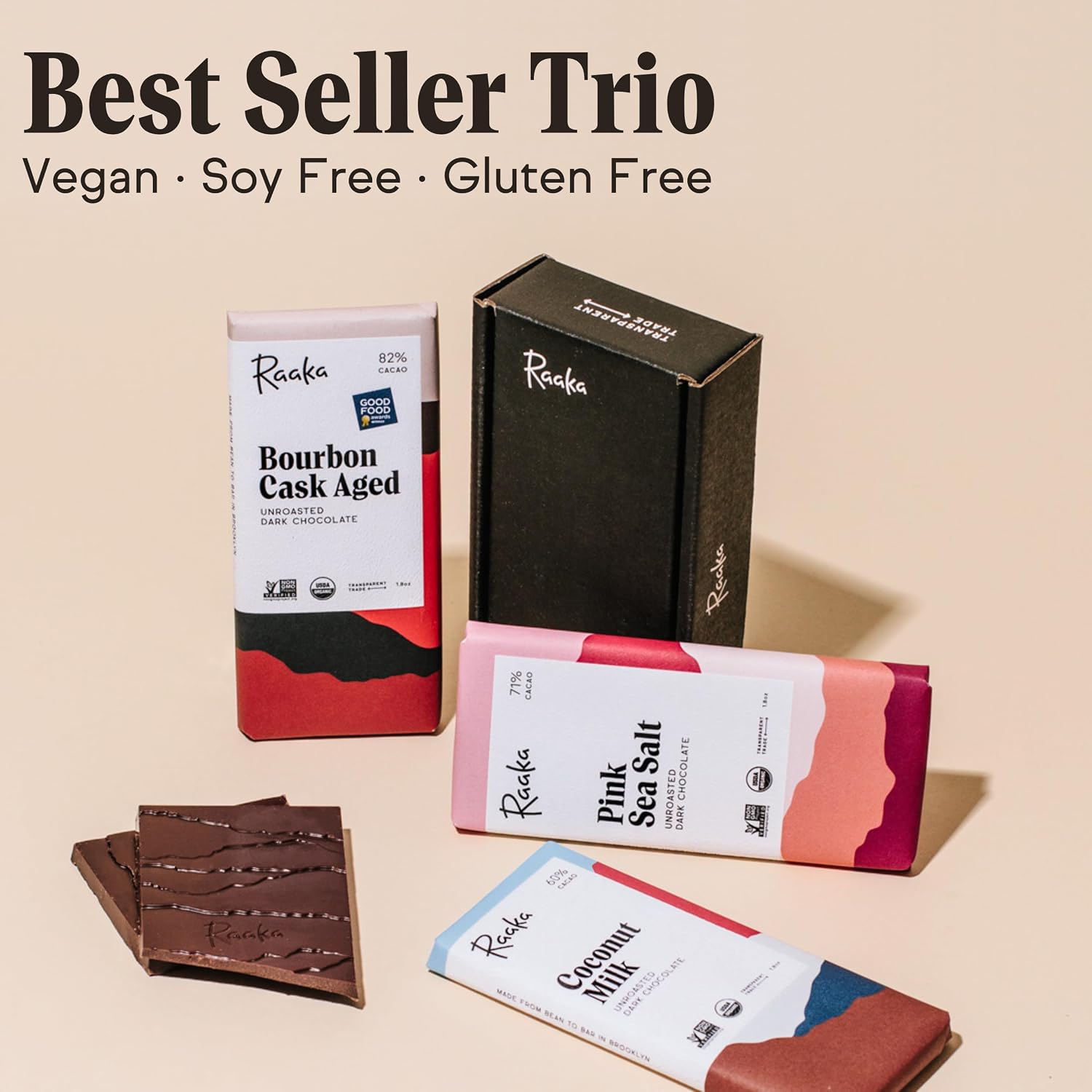
Check price on AmazonRaaka is a Brooklyn-based bean-to-bar maker doing something technically unusual: they specialize in unroasted cacao. Most chocolate makers roast their beans to develop flavor and reduce bitterness; Raaka skips that step to preserve what they describe as raw flavor character — a more acidic, sometimes wine-like or ferment-forward profile. Serious Eats’ 2024 deep dive on fermentation and chocolate flavor explains that unroasted cacao retains more of the bean’s natural fermentation compounds, which can read as fruity, floral, or sharp depending on origin.
This produces distinctive bars, but it also produces bars that are not for everyone. The standard 68–70% range — their Haitian Hispaniola and Dominican Republic origins — is where Raaka is at their most accessible: bright, a little tangy, genuinely different from a conventional dark bar.
Then there is the Raaka 100% bar, and this needs a dedicated flag.
The 100% bar contains no sweetener of any kind. Zero. It is pure cacao, and it tastes like it — intensely bitter, chalky to some palates, deeply savory to others. Aggregated ratings across major retail platforms sit at approximately 3.9 out of 5, with critical reviews consistently citing unexpected bitterness rather than quality defects. That’s not a product failure — it is exactly what it is. But buyers who are accustomed to 70–85% dark chocolate will find the 100% bar a genuinely extreme step, not just a slightly darker version of what they know. The absence of any sweetener removes the flavor scaffolding that makes even intense dark chocolate enjoyable to most palates. Approach it as an ingredient or a deliberate exploration, not a snacking bar.
Who this is for: Raaka at 68–75% is the right pick for the flavor-forward buyer who wants genuine bean-to-bar craft and is comfortable with an unfamiliar taste profile. The 100% bar is a specialist product — buy it only if you are specifically exploring pure cacao.
Raaka
$26.95
In stock on Amazon
Check price on AmazonBeyond Good (Madagascar) — The Origin-Storytelling Bar
Raaka
$26.95
In stock on Amazon
Check price on AmazonBeyond Good sources exclusively from Madagascar and has built its entire brand identity around a single terroir story. Madagascar cacao — specifically from the Sambirano Valley — has a widely documented flavor signature: red fruit, mild acidity, and a brightness that surprises buyers who expect conventional dark chocolate bitterness. Reviewers on retail platforms repeatedly note being caught off guard by what reads as berry or cherry notes in a bar labeled simply “dark chocolate.” There is no fruit in it. That fruitiness is origin character, a product of specific cacao genetics and fermentation conditions in that region (the FAQ below explains the mechanism).
Beyond Good’s sourcing model is direct trade, and the company publishes farm-level transparency data including farmer income comparisons. Their 75% Madagascar bar is probably the single most frequently cited “gateway” bar for converting milk chocolate buyers toward dark — the fruit-forward profile softens the bitterness entry point considerably.
Who this is for: Beyond Good is the strongest pick when you want a flavor experience that will surprise and convert a skeptic, or when you need one bar to anchor a tasting that makes a case for origin-driven chocolate. The Madagascar-only sourcing is also a limitation — there’s no variety of origin to explore within the brand.
Raaka
$26.95
In stock on Amazon
Check price on AmazonDecision Frame: Which Brand Fits Your Situation
| Situation | Best pick |
|---|---|
| Corporate gifting, large volume, verified ethical sourcing | Tony’s Chocolonely |
| Daily wellness-aligned purchase, organic and carbon-neutral priority | Alter Eco |
| Flavor-focused buyer, bean-to-bar craft, comfortable with acidity | Raaka (68–75% range) |
| First-time dark chocolate buyer, origin exploration, surprise factor | Beyond Good Madagascar |
| Pure cacao, no sugar, keto or elimination use | Raaka 100% — only if you know what you’re getting into |
If your primary driver is verifiable ethical sourcing at a price that works for bulk orders: Tony’s. If flavor discovery is the actual goal and you want the most interesting tasting experience per dollar: Beyond Good or Raaka. If the buyer is wellness-motivated and reads labels before eating anything: Alter Eco.
Frequently Asked Questions
What does “bean-to-bar” actually mean for flavor?
Bean-to-bar means the maker controls the full process from raw cacao bean to finished bar — including fermentation oversight, roasting, grinding, and tempering. Food & Wine’s 2023 bean-to-bar explainer makes the point that each stage affects flavor in ways that are invisible on a label. A maker who buys pre-made chocolate mass has no control over those variables. Bean-to-bar makers can choose lighter roasting (brighter, more acidic flavor), longer conching (smoother texture), or specific fermentation protocols that emphasize certain flavor notes. The result is more distinctive, more variable, and more traceable flavor.
Is Raaka suitable for someone who normally likes milk chocolate?
Cautiously, yes — but start with their lower-percentage bars (around 68–70%), not the 100%. The unroasted profile does produce a fruitier, less roasted-bitter character than conventional dark chocolate, which can bridge the gap for milk chocolate buyers. The 100% bar is genuinely extreme territory and a poor introduction for anyone still warming up to dark chocolate.
Why does some dark chocolate taste fruity when it has no fruit in it?
The flavor compounds develop during cacao fermentation. When cacao beans are fermented after harvest — a step that takes several days and is crucial to flavor development — yeasts and bacteria produce esters and acids that create fruity, floral, and wine-like notes. Serious Eats’ 2024 coverage of fermentation and chocolate flavor explains how Madagascan cacao, with its specific microbial environment and bean genetics, consistently produces red-fruit compounds even without any fruit addition. The flavor is in the bean.
What is the difference between fair trade and direct trade?
Fair trade is a third-party certification with audited standards — it sets a price floor and community premium requirement but doesn’t guarantee high farmer income at the individual level. Direct trade is a relationship model with no third-party verification — it depends entirely on the maker’s integrity and transparency. The Chocolate Life, in its 2024 coverage of sourcing labels, recommends looking for makers who publish actual farmer income data and farm visit records, not just label language.
Is the Raaka 100% bar actually edible if you’re used to 70–85% dark chocolate?
Technically yes, physiologically no problem. Practically, most buyers find it a significant palatability challenge. Aggregated reviews sit around 3.9 out of 5, with critical reviews consistently citing unexpected bitterness and lack of sweetness rather than quality defects. If you’re accustomed to 85%, the jump to 100% is not linear — it removes the last structural sweetness that makes dark chocolate enjoyable for most palates. Treat it as an ingredient or an exploration, not a snacking bar.
Which of these brands are genuinely dairy-free versus “may contain milk”?
Raaka and Beyond Good both produce dark bars formulated without dairy ingredients. However, facility cross-contact is a manufacturing reality — “may contain milk” language appears on bars made in shared facilities. Alter Eco’s dark range is formulated dairy-free. Tony’s explicitly produces both dairy and non-dairy bars in shared production environments and labels accordingly. If strict dairy avoidance is required (not just a preference), verify against current lot packaging directly — formulations and facility arrangements can change, and a 2026 purchase should be checked against current labeling rather than any editorial description.