May 1, 2026 • Celeste Marchand • 10 min reading time • Prices verified June 6, 2026
Unsweet, Uncompromising, Unexpectedly Good: 85–100% Dark Chocolate Bars Honestly Reviewed
Pick up a chocolate bar labeled 85% and the number on the front tells you what fraction of the bar — by weight — comes from the cacao bean itself: the cocoa solids and cocoa butter pressed from it. Everything else, at a high percentage, is pretty much just a little sugar and maybe vanilla. At 100%, there is no sugar at all — literally nothing but cacao. If that sounds extreme, it can be. But it doesn’t have to taste like chewing on a pencil eraser, and that’s exactly what this guide is here to sort out. Whether you’re cutting sugar for dietary reasons, chasing the complex flavor notes that cacao can actually produce without sweetness masking them, or just curious why anyone would voluntarily eat something labeled “unsweetened,” the bars reviewed here will give you a clear-eyed answer.
The honest upfront disclosure: the percentage on the label tells you how much cacao is in the bar, but it tells you almost nothing about how that bar tastes. Origin, fermentation, roast level, and the maker’s processing choices all shape flavor more than the number alone. A 90% bar from one maker can taste bright and fruity; the same percentage from another can be flat, astringent, and harsh. That’s the real story here.
The Three Buyer Types Converging on High-Percentage Dark Chocolate
Before getting into specific bars, it helps to understand why people are actually buying in this category — because the reasons are genuinely different, and they predict whether a bar will satisfy or disappoint.
Type 1: The keto or low-carb buyer. For this person, the percentage is a proxy for sugar content. Fewer sugar grams per serving is the whole point. The flavor is secondary — though a bar that achieves low sugar and tastes good is obviously the goal.
Type 2: The flavor-transitioning enthusiast. These buyers started somewhere around milk chocolate or 60% dark and have been gradually walking up the scale. They often describe a progression — 70%, then 85%, now curious about 90%+ — that reads less like discipline and more like genuine curiosity.
Type 3: The craft-curious buyer. These are people who already understand that cacao is an agricultural product with regional flavor variation, and they want that complexity without sweetness dulling the signal. The promise here is terroir transparency, not just intensity.
The bars in this review serve all three types, but not always the same bar for each.
Bar-by-Bar: What the Review Record Actually Shows
Lindt Excellence 85% Cocoa
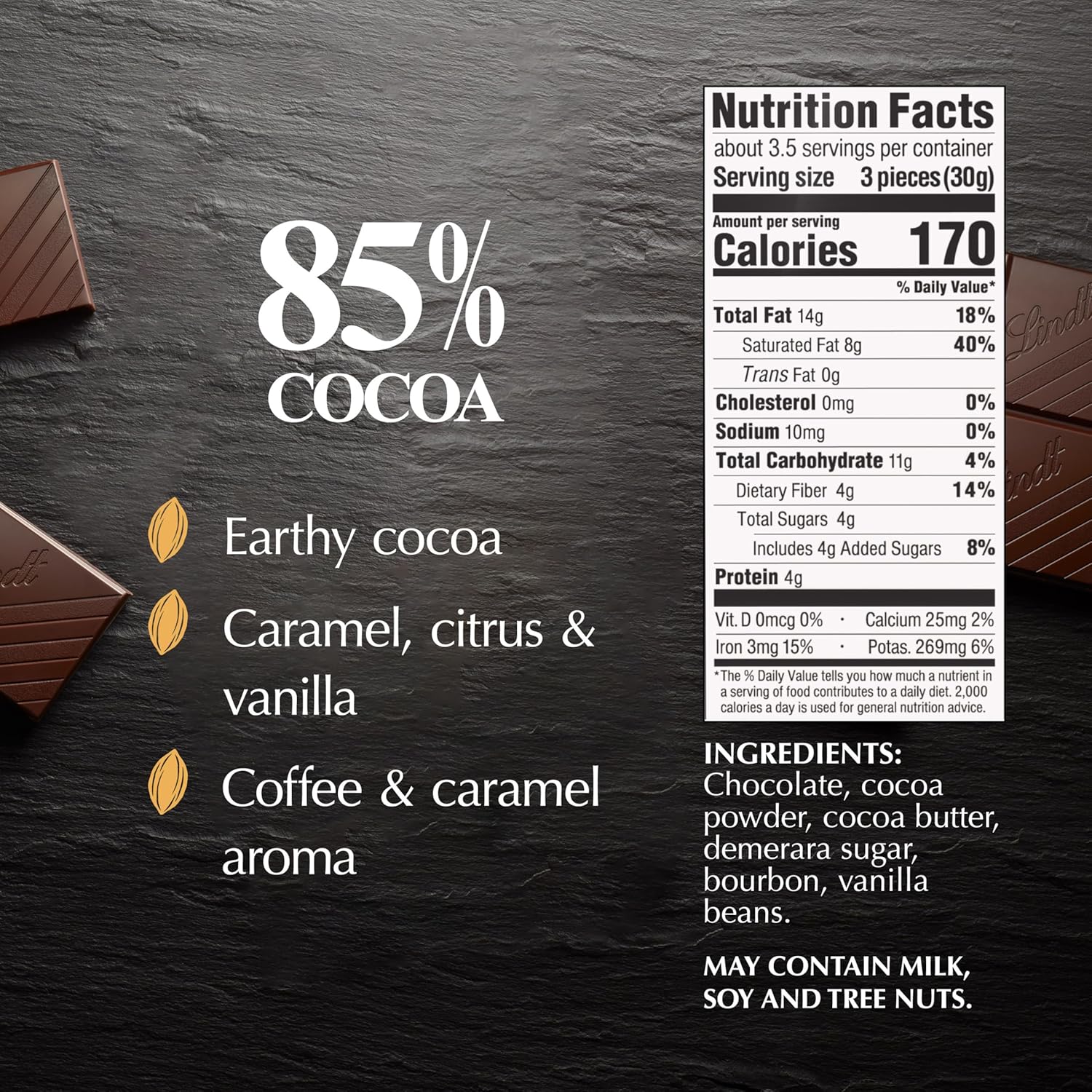
This is the most widely reviewed bar in the category and probably the most important gateway product in high-percentage dark chocolate. Aggregated buyer feedback points to a bar that is genuinely approachable at 85% — roasty, moderately bitter, with a clean finish and no harsh chemical aftertaste. Serious Eats, in its guide to reading a chocolate label, explains that European-style conching — an extended mixing process that smooths texture and mellows harsh notes — tends to produce exactly this kind of result at high percentages. Lindt’s long conching times are a documented part of their manufacturing approach and align directly with why this bar is as smooth as it is for the percentage.
For keto buyers, the nutritional profile is a legitimate draw. For the flavor-transitioning buyer, the Lindt 85% is consistently cited as the first bar that made people understand why someone would eat 85% dark voluntarily.
The honest limitation: this is not a complexity-forward bar. There’s not much in the way of fruit notes, florality, or the kind of terroir character that single-origin bars chase. It’s consistent, reliable, and approachable — which are real virtues — but it won’t surprise a seasoned taster.
Venchi
$12.50
In stock on Amazon
Check price on AmazonChocolove 88% Strong Dark Chocolate
The pattern across Chocolove 88% reviews is genuinely interesting: buyers keep expressing surprise that 88% can be this smooth. Bon Appétit’s dark chocolate tasting notes feature observes that alkalization processes and extended conching can dramatically soften bitterness at percentages where harshness is expected — and Chocolove’s processing appears to do exactly that.
For a buyer who has already made peace with Lindt 85% and wants to step up, Chocolove 88% is probably the right next bar. It’s meaningfully darker without crossing into the territory where approachability breaks down. For the low-carb buyer, the slightly higher percentage does translate to marginally lower sugar content per serving.
Counter-intuitively, reviewers consistently describe Chocolove 88% as smoother than many 85% bars. The higher percentage doesn’t automatically mean more bitterness; processing decisions matter more. If you find Lindt 85% slightly harsh, Chocolove 88% is genuinely worth trying before abandoning the category.
Raaka
$36.95
In stock on Amazon
Check price on AmazonTCHO 85% Dark Chocolate
TCHO has built a reputation — noted in Epicurious’s single-origin dark chocolate buying guide — around traceable sourcing and calibrated flavor profiles. The 85% bar consistently draws praise from the keto-aware buyer community for its nutritional transparency: the sugar-per-serving figure is prominently cited in reviews and appears to be a real differentiator for buyers reading labels carefully.
Flavor-wise, reviewers describe it as cleaner and less aggressively bitter than some European-style bars at the same percentage — which tracks with TCHO’s Northern California craft-chocolate positioning and its emphasis on lighter roast profiles. Where Lindt reads as roasty and toasty, TCHO at 85% reads as cleaner and slightly more neutral, which some buyers prefer and others find less interesting.
For the buyer whose primary filter is the nutrition panel, TCHO 85% is the most explicitly label-friendly option at this percentage tier.
Raaka
$36.95
In stock on Amazon
Check price on AmazonRaaka 100% Unroasted Dark Chocolate
This bar generates the most instructive review split in the entire category, and glossing over it would be a disservice.
One-star reviews describe expecting “strong dark chocolate” and being blindsided by something completely different. Five-star reviews describe getting exactly what they wanted. This is not a quality disagreement. It is a product-fit disagreement.
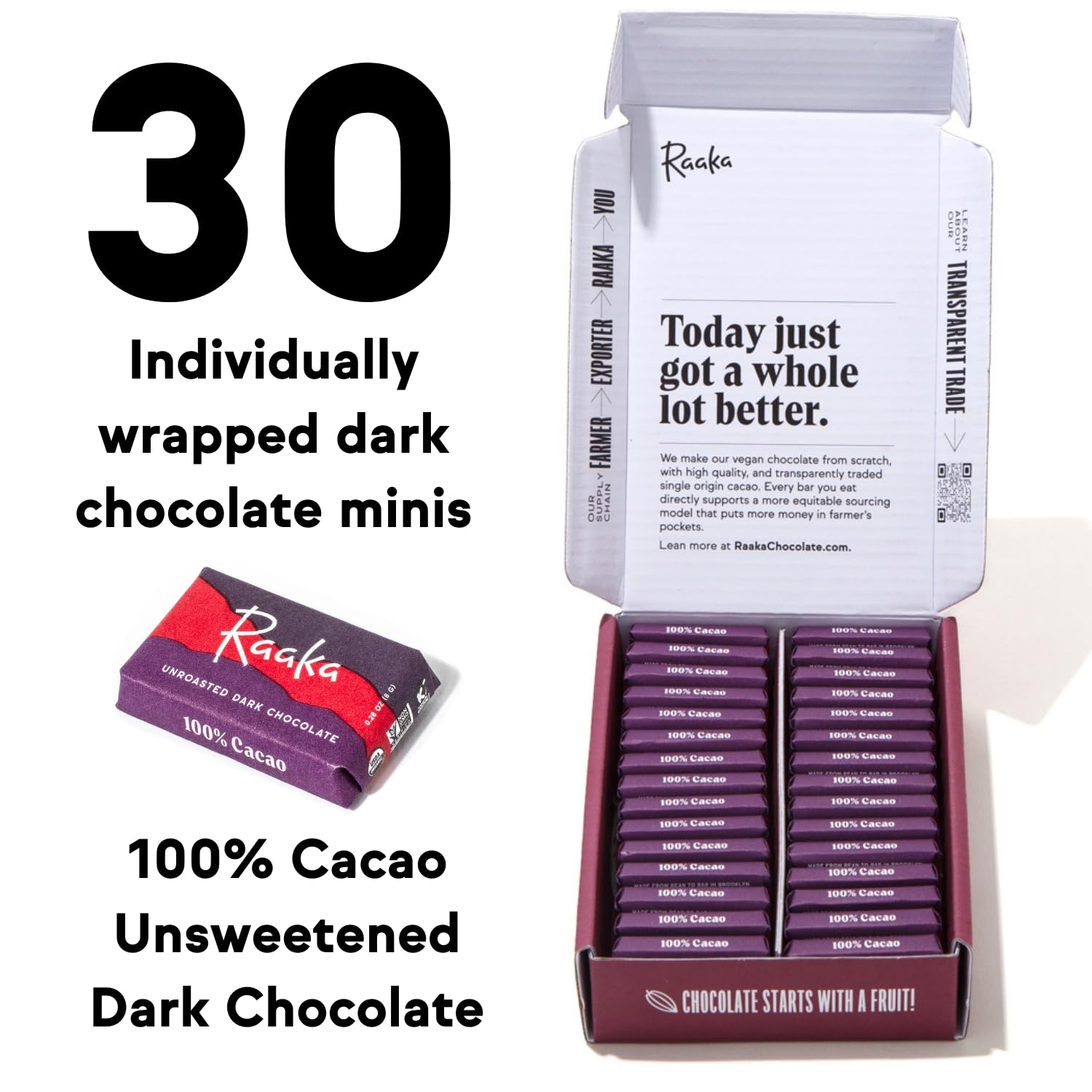
Raaka 100% is literally unsweetened cacao — no sugar whatsoever — and it is also unroasted, which means it lacks the caramelized, toasty notes that most people associate with “dark chocolate flavor.” Smithsonian Magazine’s overview “The Science of Chocolate” explains that roasting drives the Maillard reaction and generates the pyrazine compounds responsible for recognizable chocolate aroma. Without roasting, you get a more raw, intensely fruity, and often wine-like or earthy flavor profile that bears relatively little resemblance to conventionally processed dark chocolate.
For the craft-curious buyer who wants to taste cacao as close to its agricultural source as possible, this is genuinely fascinating. The Chocolate Life, the specialty resource founded by industry analyst Clay Gordon, describes 100% unroasted bars as expressing “the full, unmediated profile of the bean” — intensely fruity, earthy, tannic, and in some origins, almost ferment-forward in character. For anyone expecting “really, really intense dark chocolate,” however, it will be a shock.
Lindt
$69.36
In stock on Amazon
Check price on AmazonVenchi 85% Venezuelan Dark Chocolate
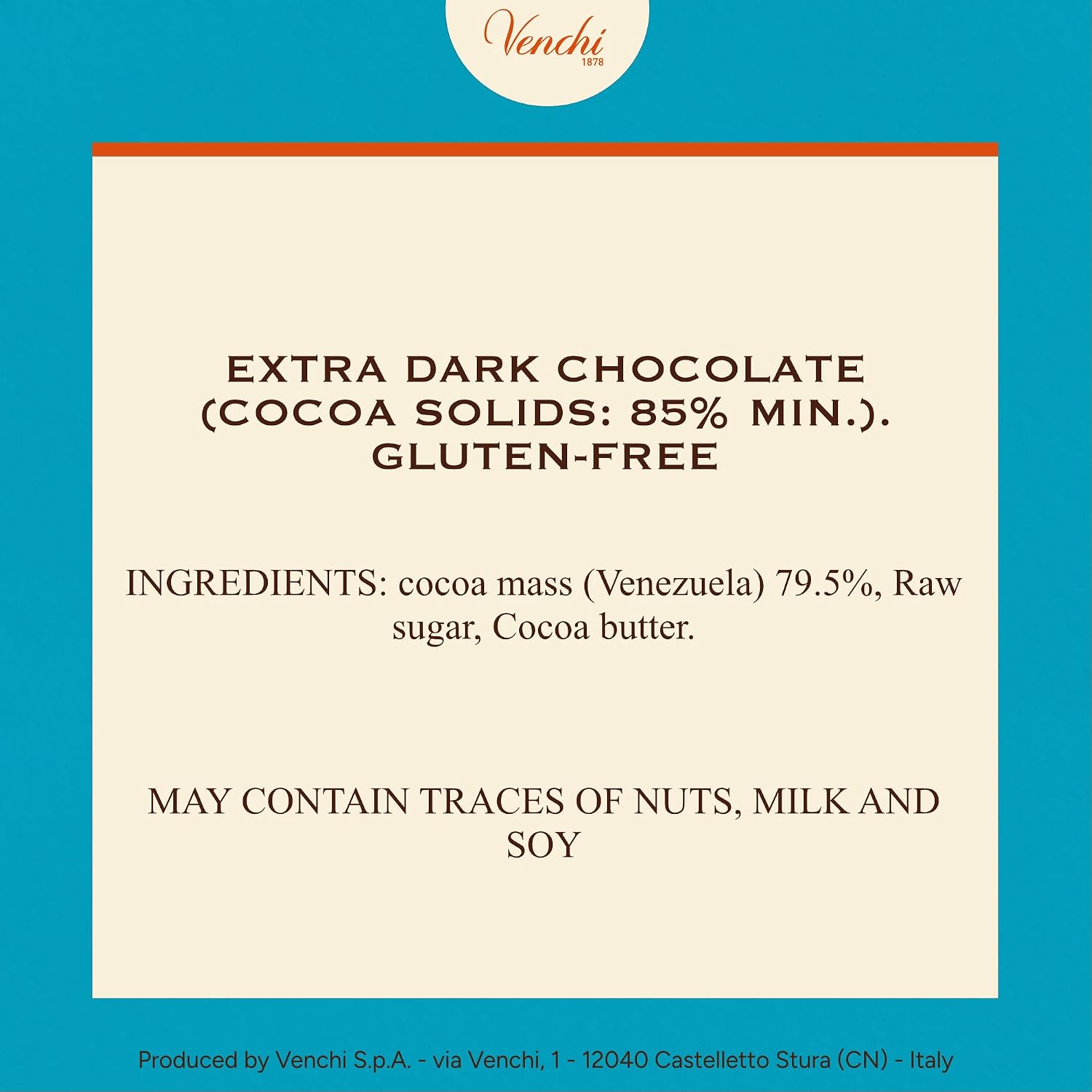
This is where a fulfillment warning is warranted, and it needs to be said plainly: across aggregated reviews, Venchi’s high-percentage bars have generated a meaningful volume of complaints about arriving melted, with bloom (the gray, streaky appearance that results when chocolate melts and re-solidifies), or past their best-by date. These complaints are specific enough and consistent enough that temperature-sensitive shipping appears to be a real and ongoing issue for this product when ordered online.
The chocolate itself — when it arrives in proper condition — draws praise for its Venezuelan origin character: reviewers describe red fruit notes, earthiness, and a smoothness that reflects Venchi’s Italian heritage and manufacturing approach. Epicurious’s single-origin dark chocolate buying guide notes that Venezuelan cacao has historically been prized for pronounced fruity complexity and a rounded, relatively low-astringency profile — characteristics that a skilled Italian manufacturer like Venchi is well-positioned to showcase.
The practical recommendation: if you’re buying Venchi 85% online, check the seller’s reviews for shipping complaints before ordering, especially between April and October when ambient temperatures in US transit facilities can spike dramatically. A bar that arrives bloomed or melted and re-set is not ruined from a food safety perspective, but the texture and snap are compromised — and for a premium bar at this price, that’s a meaningful disappointment.
Lindt
$69.36
In stock on Amazon
Check price on AmazonBy the Numbers: Sugar and Carbs Across the Lineup
| Bar | % Cacao | Approx. Sugar per 40g serving | Best Fit | Tier |
|---|---|---|---|---|
| Lindt Excellence 85% | 85% | ~6g | Gateway, keto-curious | Venchi — $12.50 |
| Chocolove Strong Dark 88% | 88% | ~5g | Step-up from 85%, keto-aware | Raaka — $36.95 |
| TCHO 85% Dark | 85% | ~5g | Keto-primary, label-readers | Raaka — $36.95 |
| Raaka 100% Unroasted | 100% | 0g | Craft-curious, unsweetened baking | Lindt — $69.36 |
| Venchi 85% Venezuelan | 85% | ~6g | Flavor complexity (buy with caution re: shipping) | Lindt — $69.36 |
Figures drawn from published nutrition panels; verify current panels before purchase as formulations change.
If X, Then Y: The Decision Rules
If your primary goal is low sugar and you want a bar that actually tastes good: Start with TCHO 85% or Chocolove 88%. Both have the nutritional profile you’re looking for and a flavor experience that won’t require you to override your instincts.
If you’re stepping up from 70% dark and want to know if you’ll like 85%: Lindt 85% is the right test. It’s the most forgiving on-ramp to high-percentage eating, and its widespread availability means you can run the experiment cheaply.
If you want single-origin flavor complexity at high percentage: Venchi 85% Venezuelan is the flavor target — but buy from a retailer with cold-pack shipping or a strong fulfillment track record in warm months.
If you want 100% cacao: Be honest with yourself about what you’re after. If it’s unsweetened intensity for baking or the raw-cacao sensory experience, Raaka 100% delivers. If you expect it to taste like “really strong dark chocolate,” it won’t — and the review record is unambiguous on this point.
Frequently Asked Questions
What does 100% cacao actually taste like — is it edible? Yes, it’s edible, but it tastes nothing like most people expect. The Chocolate Life, Clay Gordon’s specialist resource on cacao and chocolate making, describes 100% bars as expressing the full, unmediated profile of the bean: often intensely fruity, earthy, tannic, and in unroasted versions, almost wine-like or ferment-forward. There is no sweetness to soften any of this. It’s an acquired experience — but the word “chocolate” in the marketing may set the wrong expectation for first-time buyers.
Is Lindt 85% good for keto or low-carb diets? Generally yes, in moderation. The sugar content per serving is meaningfully lower than mid-range dark chocolate bars, and the high fat content from cocoa butter fits keto macro ratios. Check the current nutrition panel before purchasing, as formulations can change, and portion size matters — the bar is designed to be eaten in small pieces, not all at once.
How does Chocolove 88% compare to Lindt 85% in bitterness? Counter-intuitively, reviewers consistently describe Chocolove 88% as smoother than many 85% bars, including Lindt. The higher percentage doesn’t automatically mean more bitterness; processing decisions matter more. Bon Appétit’s dark chocolate tasting notes feature makes this point explicitly: conching time and alkalization level are better predictors of perceived bitterness than percentage alone.
Why did my Venchi chocolate arrive melted or discolored? Venchi bars are premium, relatively fragile products. Chocolate begins to melt around 86–90°F, and US warehouse and transit temperatures routinely exceed this in summer months. The grayish discoloration — called bloom — results from cocoa butter or sugar migrating to the surface as the bar melts and re-solidifies. This is a shipping and handling issue, not a production defect. Buy from retailers who offer cold-pack shipping or have explicit temperature-controlled fulfillment in warmer months.
At what percentage does dark chocolate stop tasting like chocolate and start tasting like pure bitterness? There is no single threshold — it depends entirely on the maker’s processing. Smithsonian Magazine’s “The Science of Chocolate” overview makes clear that fermentation quality and roast decisions affect bitterness perception more than percentage alone: a poorly fermented 85% bar can taste far more bitter than a well-made 100% bar. Most buyers experience a meaningful shift in approachability somewhere between 88% and 95%, where residual sweetness becomes too minimal to offset tannins without skilled processing. Roasting level and conching time have more practical impact on the experience than the percentage number printed on the front of the package.